
Review · HANG GLIDING
Beginner Hang Gliding Lesson
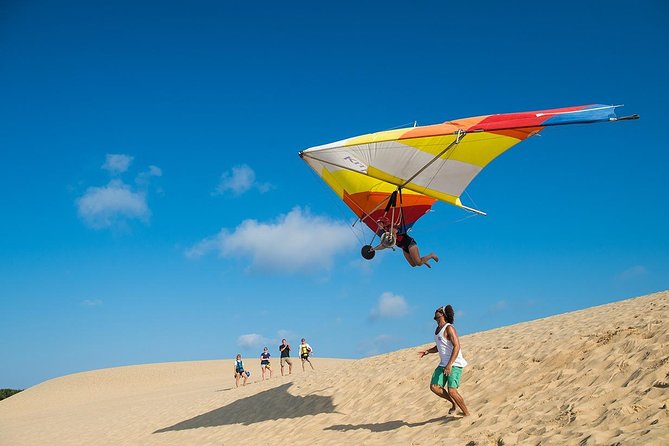
The best part of this beginner hang gliding lesson is that you do not need to commit to a long, high flight. You learn the basics, carry your gear across Jockey’s Ridge, and get five chances to improve. The setting near the Wright Brothers’ first flying ground gives the lesson a fitting sense of place.
I like the small maximum group of three people, which leaves room for direct coaching. I also like the built-in progression: your first glide may feel strange, but the instructors give real-time tips before the next one. The main drawback is physical. Walking uphill through loose sand, standing in the sun, and running at takeoff can be tiring.
Key points at a glance
- Five training flights: You get repeated practice over roughly two hours, not a single quick ride.
- A 30-minute ground school: The lesson begins with hands-on instruction before you handle the glider.
- Jockey’s Ridge setting: You walk onto one of the Outer Banks’ most distinctive sand dunes near the Wright Brothers’ historic flying area.
- Small class size: The activity allows no more than three participants, making personal instruction possible.
- Bring your own water and sun protection: Neither is included, and the dunes offer little shade.
- Weather controls the schedule: Strong wind or poor conditions can lead to a rescheduled lesson or full refund.
Five flights on Jockey’s Ridge
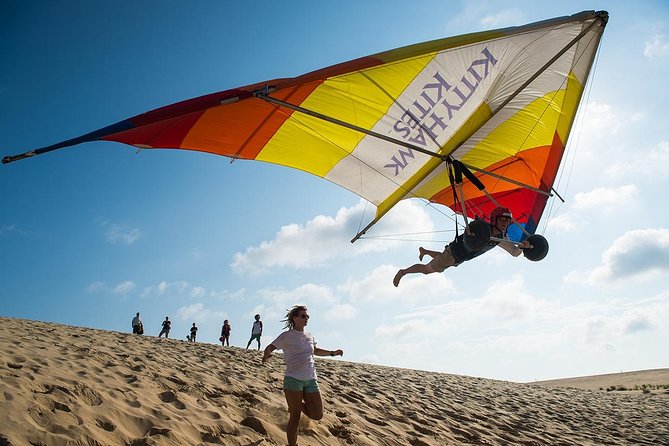
This is a hands-on introduction, not a sightseeing flight where you simply hang beneath a glider while someone else does the work. You learn how to position yourself, listen for commands, run when instructed, and make adjustments during each short glide.
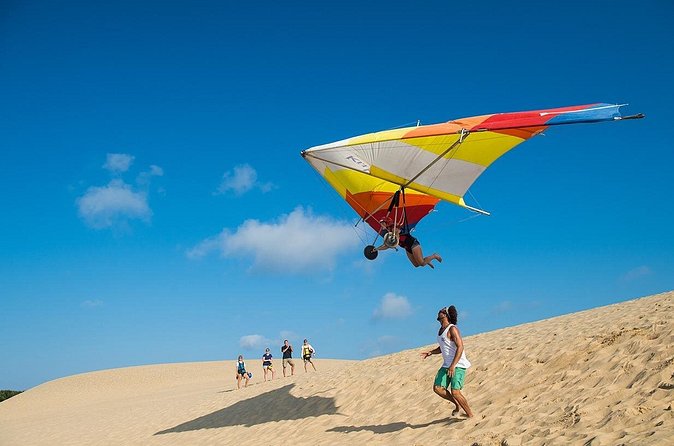
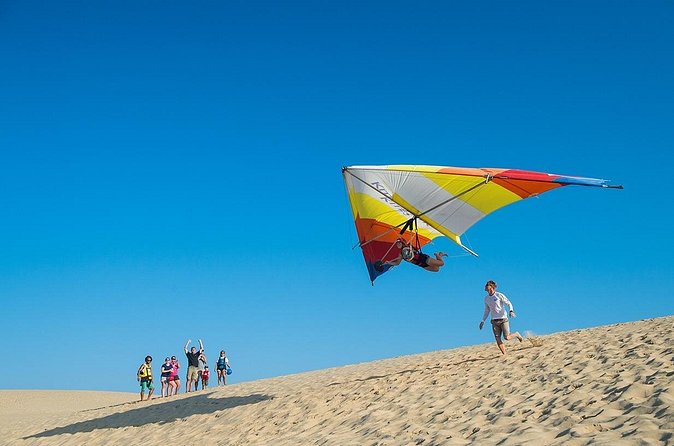
The lesson takes place at Jockey’s Ridge State Park, a broad sweep of shifting sand in Nags Head. The dune gives you height, wind, and an open runout area. It also gives you heat, loose footing, and a workout. You will spend part of the day walking uphill, so think of this as an outdoor activity with a flight component, not a relaxed amusement-park ride.
The five flights are the real value of the session. Your first attempt is mostly about following instructions and getting comfortable with the equipment. Later flights give you a chance to correct your body position, improve your launch, and understand what the instructor means by commands such as flare. A five-flight format lets you learn from small mistakes instead of judging the whole experience by one nervous first run.
The glides are designed for beginners and stay relatively low. Do not book this expecting a long, high, untethered flight across the coast. The appeal is the learning process: you are close to the sand, supported by instructors, and given several chances to improve.
More Hang Gliding in the world:
- Rio de Janeiro: Hang Gliding Adventure
★ 4.6 · 760 reviews - Rio de Janeiro: Hang Gliding Tandem Flight
★ 4.8 · 426 reviews - Rio de Janeiro: Hang Gliding or Paragliding Flights
★ 4.7 · 132 reviews
Ground school before the sand
The first 30 minutes are devoted to ground school. This is an interactive introduction, so you should expect more than a quick safety speech. You learn the basic procedure before heading out with the equipment.
This opening matters because hang gliding depends on timing and clear movement. You need to know when to run, how to hold yourself, and how to respond to instructions without overthinking. Several beginners have found the instructions easy to follow, but that does not mean you should treat the class casually. Listen closely. The simplest instruction is often the one that makes the difference between a clean launch and a stumble in the sand.
After ground school, you have a short break to collect personal items, use the restroom, and put on your gear. Each participant receives a helmet and harness, and you carry them out to the dunes. The hang glider itself is included as well, so you do not need to rent separate equipment.
The preparation is straightforward, but give yourself enough time to deal with loose belongings before walking out. The activity returns to the school at the end, but the flight portion takes place away from the building.
Walking out with your helmet and harness
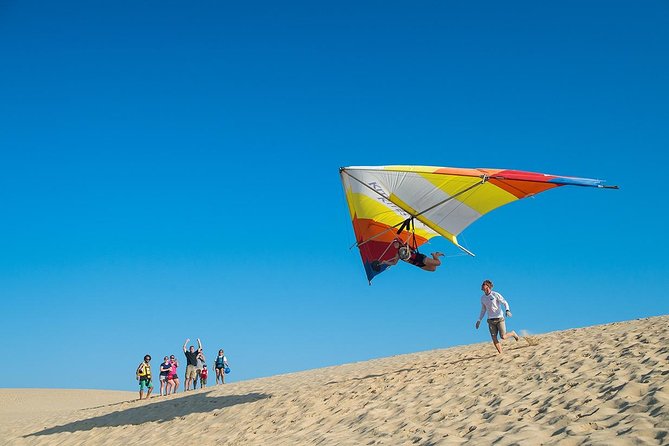
The class walks from the school to Jockey’s Ridge for the flight portion. The route includes a boardwalk and then soft sand, with shoes often removed before reaching the best launch area. That change in footing is one of the practical details worth knowing in advance.
Loose sand takes more effort than firm beach sand. You may find yourself working uphill to reach the launch point, then climbing again between flights. One participant described the hill used to position for each glide as steep, while another noted that the walk over the dunes requires decent physical condition.
Wear clothing and footwear suited to heat and sand. The supplied information does not specify a required shoe type, so the sensible choice is something secure and easy to remove if the instructor asks you to go barefoot. Keep your load light. You will be carrying your helmet and harness, and you do not want a heavy bag slowing you down.
The dune setting is a major part of the experience. You get broad views, open air, and a direct sense of how wind and elevation affect a glider. The tradeoff is that there is no dependable shade on top. A hot, sunny day can make the lesson much harder than a cool, breezy one.
What the five training flights feel like
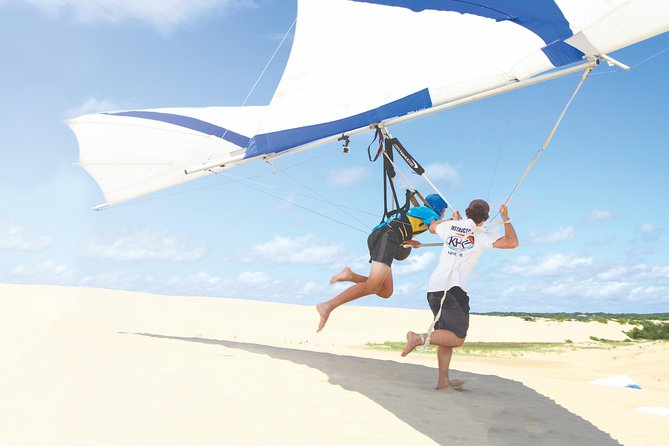
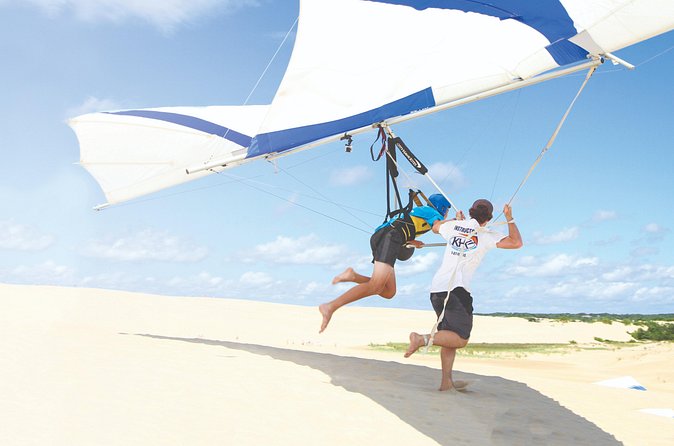
Once everyone is geared up, instructors guide each participant through the launch and landing process. The lesson allows five flights per person over about two hours. The small maximum group means the instructors can watch your technique and give advice between attempts.
The first flight may feel more like controlled chaos than graceful aviation. That is normal for a beginner activity involving a running start, a large glider, wind, and unfamiliar body positioning. Focus on the instructions rather than trying to force the glider to behave.
The coaching is the strongest part of the experience. Instructors have included Larson, Brad, Ben, Legs, Drake, Cooper, Rich, Megan, Michael, Josh, Alex, Oliver, Alise, David, Jude, and Branden. The names change, but the useful pattern is consistent: instructors give immediate corrections and keep the mood light while paying close attention to safety.
You will likely notice improvement by the second or third attempt. One beginner described receiving real-time advice after each glide and feeling a clear difference across the five flights. That is exactly what this format should provide. The goal is not to look polished from the start. The goal is to understand what you did, adjust, and try again.
You do need to run when told. This is not a strenuous race, but it is more demanding than sitting in a harness and waiting for lift. Warm up if you are prone to muscle strains. One participant pulled a hamstring and completed only one flight, so a few easy stretches before the session are a sensible precaution.
Soft sand helps soften imperfect landings, but it does not remove every risk. You still need to follow the instructor’s commands, especially during takeoff and landing. A beginner who missed instructions on a later flight reported an awkward landing without injury, but that is a reminder to stay focused even after you start feeling confident.
Same thermals, a different launch:
- Paragliding Oludeniz – Fethiye, Turkey
★ 5.0 · 2,128 reviews - Interlaken: Tandem Paragliding Flight with Pilot
★ 4.9 · 2,117 reviews - Oludeniz Paragliding Fethiye Turkey, Additional Features
★ 5.0 · 1,813 reviews - Cape Town: Tandem Paragliding Adventure
★ 4.7 · 1,693 reviews
Wind, weather, and the value of flexibility
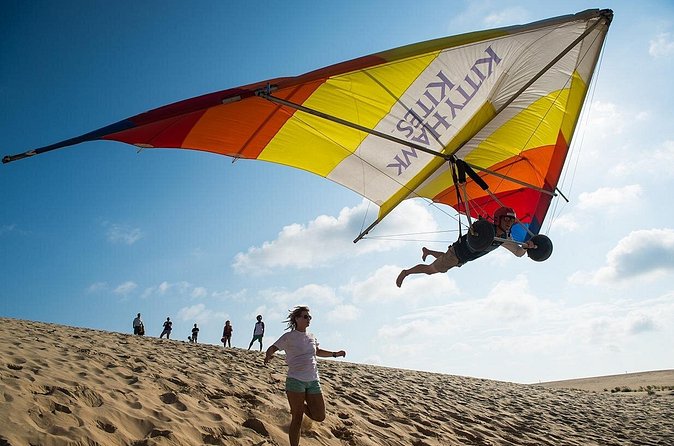
Hang gliding depends on suitable weather. Wind that is too light can make the lesson less effective, while wind that is too strong can make it unsafe. The instructors may reschedule the session, shorten it, or cancel it if conditions change.
That uncertainty is not a flaw in the operation. It is part of choosing a wind-powered activity. The best way to handle it is to book early enough in your Outer Banks stay to leave room for another date. This activity is booked about 22 days ahead on average, so last-minute spaces may not be easy to find.
Weather has caused both cancellations and shortened lessons. In one case, a morning session moved to the afternoon because the wind was too strong. In another, poor conditions canceled the day, but the participant received options for rescheduling or a voucher. If the company cancels because of poor weather, you can choose a different date or receive a full refund.
You can cancel for a full refund if you do so at least 24 hours before the start time. Changes or cancellations inside that window are not accepted for a refund. The cut-off follows local time.
Heat, water, and physical effort
The most common mistake would be treating this as a light, three-hour beach stop. The lesson may last about three hours, and much of that time is spent outdoors on exposed sand.
Bring a full bottle of water, since bottled water is not included. Pack sunscreen, a hat if it will not interfere with the helmet, and protection for the strong sun. There is little or no shade on the dune, and one participant found the heat uncomfortable enough to raise concerns about overheating.
A quick snack may also help, particularly if you are scheduling the lesson in the afternoon. The school may have something available for purchase, but you should not rely on that when planning your day.
The stated weight limit is 235 pounds. The activity information says most people can participate, but you should also consider your ability to walk over soft sand and run during takeoff. The lesson has included people from teens through their 60s, yet fitness needs vary from person to person.
Service animals are allowed. The experience is offered in English, and the ticket is mobile, which keeps arrival simple.
Is $149 a fair price?
At $149 per person, this is not a cheap add-on. It is a specialized lesson with equipment, instruction, a 30-minute classroom session, and five training flights. The hang glider, helmet, and harness are included, so there are no separate gear-rental charges listed.
I think the price makes the most sense if you want to learn rather than simply collect a one-time thrill. Five attempts give you time to improve, and a class of no more than three makes personal coaching more likely. A single short flight would offer less value, especially if nerves affected your first launch.
The cost is harder to justify if you mainly want a high, long aerial view. This is a beginner lesson built around low training glides. You are paying for instruction, repeated practice, and access to a controlled introduction to hang gliding, not for a long free-flight excursion.
For a family, the price can add up quickly. Still, the activity has worked well for groups with different ages and experience levels, including families in which everyone successfully flew. If only one person in your party is interested, the small group size can make that solo booking feel worthwhile.
How the experience ends
After the five flights are complete, the group walks back to the hang gliding school. The instructors review what you learned and wrap up the session there.
The return walk is part of the workout, especially after repeated climbs and launches. Plan to have water waiting and allow a little time before your next activity. This is not the best choice immediately before a formal dinner if you dislike arriving dusty, sweaty, and full of sand.
The school has also given successful participants an I flew badge and a hang gliding pass to return. These are small touches, but they give the lesson a clear finish and something tangible to take home.
Who should book this lesson?
You should consider it if you want an active Outer Banks experience with a strong local connection. The setting near the Wright Brothers’ first flight area makes the activity feel more meaningful than a generic aerial attraction. You also get direct instruction instead of simply being carried along.
It suits beginners who can follow directions, tolerate heat, and manage a walk over dunes. Families with teens and older adults have taken part, and people with no prior experience have completed successful flights. You do not need to arrive as an athlete, but you should be comfortable with a short run and uneven sand.
It may not suit you if you have limited mobility, dislike exposed sun, or want a long, high flight. The 235-pound limit is firm, and weather can interfere with even a carefully planned booking.
Should you book the Kitty Hawk Kites lesson?
I would book this if you want five chances to learn a real skill in a memorable Outer Banks setting. The instructors are patient and energetic, the class stays small, and the low training flights make the activity approachable for first-timers.
Book it earlier in your trip rather than on your final day, keep your schedule flexible for wind, and bring water and sun protection. If the thought of hiking through loose sand and running into a glider sounds exciting, $149 is a reasonable price for a genuine first taste of hang gliding. If you want effortless sightseeing from high above the coast, choose a different kind of flight.
FAQ
Where does the beginner hang gliding lesson take place?
The lesson takes place at Jockey’s Ridge State Park in Nags Head, North Carolina. The meeting point is 300 W Carolista Drive, Nags Head, NC 27959, and the activity ends back there.
How many flights do I get?
Each participant receives five training flights during the flight portion of the lesson, which lasts about two hours.
What does the $149 price include?
The price includes the beginner lesson, hang glider, helmet, harness, ground school, and instructor guidance. Bottled water and sun protection are not included.
Is there a weight limit?
Yes. The maximum listed weight is 235 pounds.
What happens if the weather is bad?
The activity requires suitable weather. If poor conditions cause a cancellation, you will be offered another date or a full refund.
Can I cancel for a full refund?
Yes, if you cancel at least 24 hours before the scheduled start time. Cancellations or changes made less than 24 hours before the start are not eligible for a refund.
Newest flight reviews around the world
- Tandem paragliding Vlore – Albania★ 3.0 · 2 reviews
- Paragliding in Vlore★ 5.0 · 5 reviews
- Albufeira: Sunset Paragliding Flight★ 4.4 · 9 reviews
- Tandem flight with paramotor from above ioannina zagori★ 5.0 · 3 reviews
- Sunset Paragliding in Agafay – Tandem Flight from Marrakech”★ 5.0 · 11 reviews
- St. Moritz Paragliding Flight Experience★ 5.0 · 2 reviews
- KLOSTERS: Paragliding For 2 – Couples (Video &Photos Incl.)★ 5.0 · 4 reviews
- Lombok : Tandem Paragliding With Pilot, Cave & Village★ 3.7 · 4 reviews
Hang Gliding, side by side.
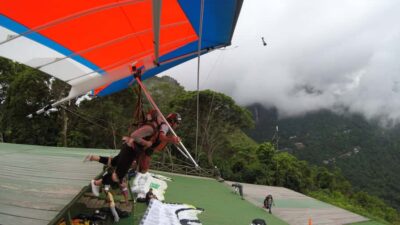
Rio de Janeiro: Hang Gliding Adventure
Read our review →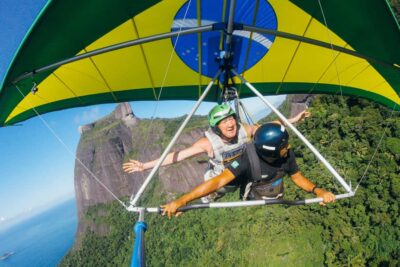
Rio de Janeiro: Hang Gliding Tandem Flight
Read our review →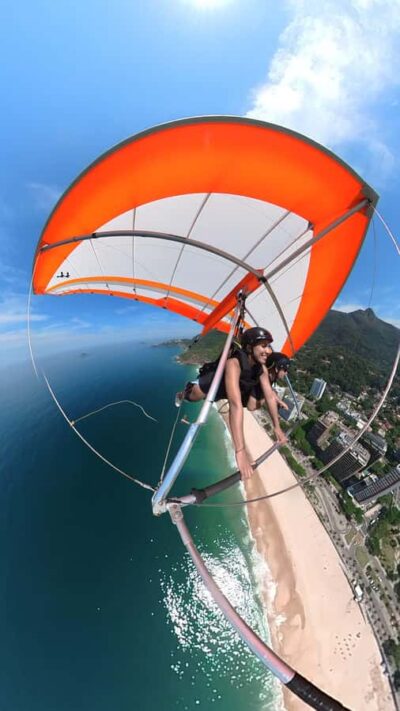
Rio de Janeiro: Hang Gliding or Paragliding Flights
Read our review →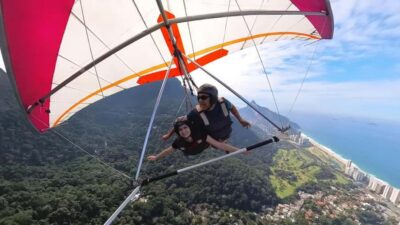
Rio de Janeiro: Hang Gliding or Paragliding Experience
Read our review →
Queenstown: Tandem Hang Gliding Experience
Read our review →
Grandy Tandem Hang Gliding 2000′ – Outer Banks
Read our review →Other lists this flight is on